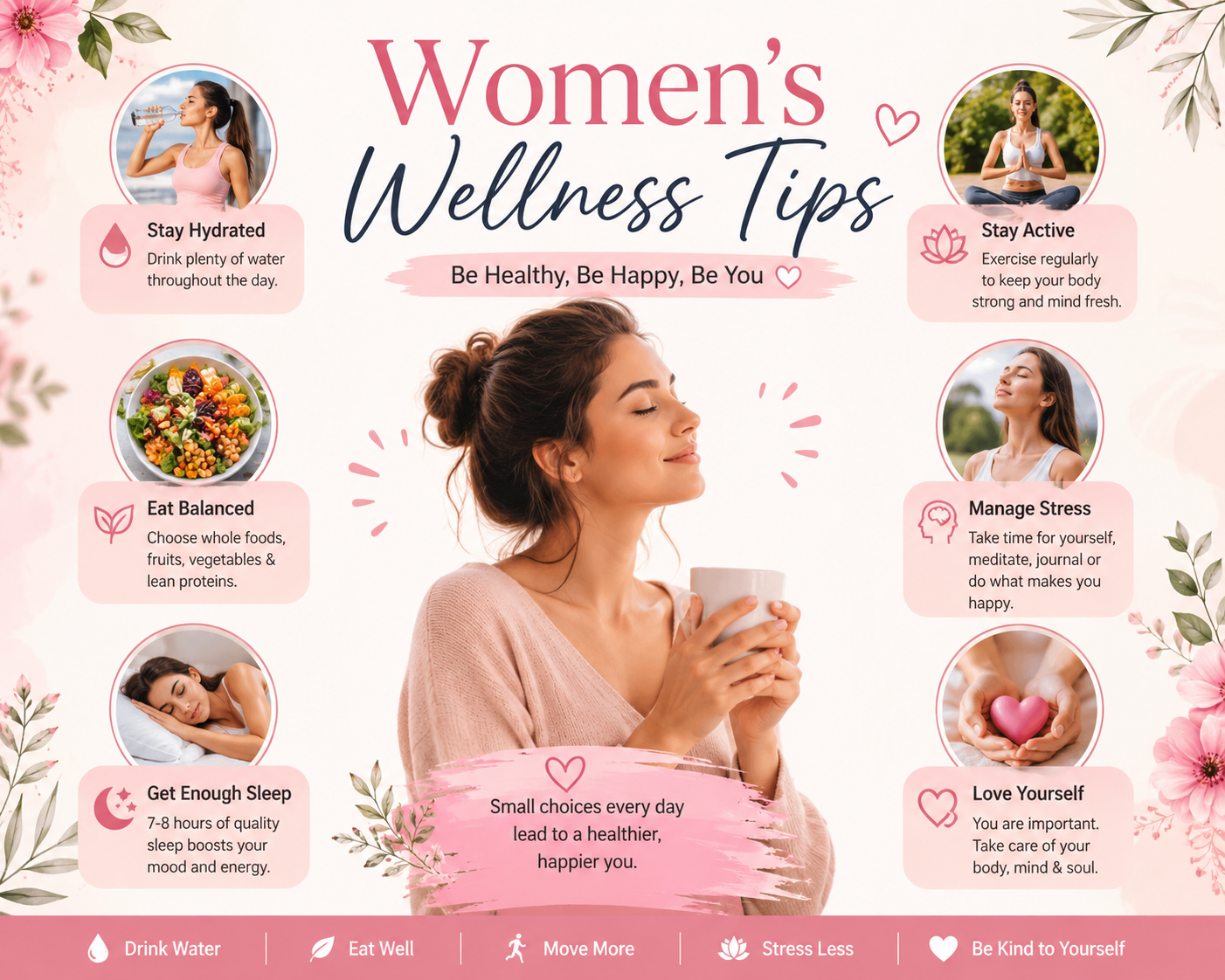
Women’s Wellness Tips
A Complete Guide to a Healthier and Happier Life
Introduction
Women’s wellness is about much more than staying physically healthy. It includes mental, emotional, and social well-being while maintaining a balanced lifestyle. Every stage of a woman’s life—from the teenage years to adulthood and beyond—comes with unique health needs and challenges. By adopting healthy habits, women can improve their quality of life, reduce the risk of chronic diseases, and enjoy greater energy and confidence.
This guide covers practical wellness tips that every woman can incorporate into her daily routine.
Why Women’s Wellness Matters
Women’s bodies experience significant changes throughout life due to hormonal shifts, pregnancy, menopause, and aging. Prioritizing wellness helps:
- Boost physical health
- Improve mental well-being
- Increase energy levels
- Strengthen immunity
- Support healthy aging
- Reduce the risk of chronic diseases
- Enhance overall happiness
1. Eat a Balanced Diet
Nutrition forms the foundation of good health. A healthy diet provides the body with essential vitamins, minerals, protein, healthy fats, and fiber.
Include:
- Fresh fruits
- Green leafy vegetables
- Whole grains
- Lean protein
- Nuts and seeds
- Low-fat dairy
- Healthy fats like olive oil and avocado
Limit:
- Sugary drinks
- Processed foods
- Excess salt
- Fried foods
- Artificial sweeteners
Healthy eating supports healthy skin, strong bones, improved digestion, and hormonal balance.
2. Stay Hydrated
Water is essential for every organ in the body.
Benefits include:
- Better digestion
- Clearer skin
- Improved concentration
- Healthy kidneys
- Increased energy
Aim for 2–3 liters of water daily, adjusting based on activity level and climate.
3. Exercise Regularly
Physical activity benefits both body and mind.
Recommended exercises include:
- Walking
- Jogging
- Cycling
- Swimming
- Yoga
- Pilates
- Strength training
Try to get at least 150 minutes of moderate exercise each week.
Benefits:
- Healthy weight
- Strong muscles
- Better heart health
- Reduced stress
- Improved mood
4. Prioritize Mental Health
Mental wellness is just as important as physical health.
Practice:
- Meditation
- Deep breathing
- Journaling
- Reading
- Spending time in nature
- Talking with trusted friends
- Seeking professional help when needed
Good mental health improves relationships, work performance, and overall happiness.
5. Get Enough Sleep
Quality sleep allows the body to repair and recharge.
Adults generally benefit from 7–9 hours of sleep each night.
Improve sleep by:
- Keeping a regular bedtime
- Limiting screen time before bed
- Avoiding caffeine late in the day
- Creating a calm sleeping environment
6. Maintain Hormonal Health
Hormones influence mood, metabolism, skin, and reproductive health.
Support hormonal balance by:
- Eating nutritious foods
- Exercising regularly
- Managing stress
- Sleeping well
- Maintaining a healthy weight
If you notice persistent symptoms such as irregular periods or severe fatigue, consult a healthcare professional.
7. Take Care of Your Reproductive Health
Regular health checkups help detect problems early.
Important practices include:
- Annual gynecological visits
- Breast self-awareness
- Safe sexual practices
- Discussing family planning with a healthcare provider
Early detection can significantly improve treatment outcomes.
8. Support Bone Health
Women are more likely to develop osteoporosis as they age.
Eat foods rich in:
- Calcium
- Vitamin D
- Magnesium
Examples include:
- Milk
- Yogurt
- Cheese
- Leafy greens
- Almonds
- Fortified foods
Weight-bearing exercises also help keep bones strong.
9. Maintain a Healthy Weight
Healthy weight management reduces the risk of:
- Diabetes
- Heart disease
- High blood pressure
- Joint problems
Focus on balanced nutrition and regular physical activity rather than restrictive diets.
10. Practice Good Skin Care
Healthy skin reflects overall wellness.
Daily routine:
- Cleanse gently
- Moisturize
- Apply sunscreen
- Drink enough water
- Eat antioxidant-rich foods
Consistent skincare helps maintain healthy, resilient skin.
11. Reduce Stress
Chronic stress affects physical and emotional health.
Ways to manage stress:
- Yoga
- Meditation
- Listening to music
- Gardening
- Exercise
- Spending time with loved ones
- Practicing gratitude
Small daily habits can make a big difference.
12. Avoid Harmful Habits
Protect your long-term health by:
- Avoiding smoking
- Limiting alcohol
- Avoiding recreational drugs
- Practicing safe driving
- Using protective equipment when appropriate
Healthy choices today contribute to better health in the future.
13. Build Strong Relationships
Supportive relationships improve emotional well-being.
Stay connected with:
- Family
- Friends
- Community groups
- Support networks
Healthy relationships help reduce stress and improve resilience.
14. Schedule Regular Health Checkups
Routine screenings are essential for prevention.
Discuss with your healthcare provider which screenings are appropriate based on your age and health history, such as blood pressure, cholesterol, blood sugar, cervical cancer screening, breast health, and other preventive tests.
15. Make Time for Yourself
Self-care is an important part of wellness.
Ideas include:
- Reading
- Crafting
- Traveling
- Taking relaxing baths
- Enjoying hobbies
- Practicing mindfulness
Taking time for yourself helps restore energy and reduce stress.
Daily Wellness Checklist
✔ Eat nutritious meals
✔ Drink plenty of water
✔ Exercise regularly
✔ Sleep 7–9 hours
✔ Practice stress management
✔ Spend time outdoors
✔ Connect with loved ones
✔ Care for your skin
✔ Schedule preventive health checkups
✔ Make time for relaxation
Benefits of a Healthy Lifestyle
Following these wellness habits can lead to:
- Better heart health
- Stronger bones
- Increased energy
- Improved mental health
- Healthier skin
- Better hormonal balance
- Reduced disease risk
- Greater confidence
- Improved quality of life
- Healthy aging